
Diseases, Climate Change, and Vector Ecology — Impacts on Public Health

As greenhouse gases, such as carbon dioxide and methane, raise global temperatures, the climate zones that contain the spread of certain diseases are becoming more fluid. Consequently, pathogens that thrive in warmer climates are spreading to new territories and putting more people at risk for infectious diseases.
Let’s take a look at some of the effects global climate change may have on vector ecologies and the spread of new diseases among ill-prepared communities.
What is a vector, and what does it have to do with climate change?
“Vectors” are the primary way that most infectious diseases spread. A vector is anything infected with a disease that can also carry and transfer a pathogen to a new susceptible host. Many vectors are living organisms, such as mosquitoes, ticks, and rodents—but even inanimate objects, ranging from infected needles to doorknobs touched by infected individuals, can be considered a vector. Vector-borne diseases make up an expansive area of epidemiology, which studies the factors that determine the cause of diseases and how they spread. Scientists and experts study vectors to understand the ways that specific diseases may spread around communities, affecting where vectors live, how long they are active, how many there are, and how effectively they transmit pathogens.

Looking closely at the ways people and pathogens interact also falls under the category of ecology: the study of relationships between organisms and their environment. So, when we combine these fields, looking at the spread of diseases in particular environments among particular organisms, we get vector ecology.
As local and regional climates shift due to climate change, so too does vector ecology. Many diseases are restricted to certain geographies and are reliant on the local climate to survive and spread. This is the case for many so-called “tropical diseases.”
For example, dengue fever cases are localized entirely around the equator because the mosquitoes that carry the pathogen thrive in the year-round warm and humid conditions of that region. In other words, cold winters in more temperate regions kill off enough mosquitoes to lessen the risk of transmission to chillier, non-equatorial climates. However, with recent warming from climate change, the safety and security offered by temperate zones is quickly diminishing.

In the United States, cases of reported vector-borne illnesses, all previously localized to the tropical region, have risen substantially in recent decades. These vector-borne illnesses include dengue, Lyme disease, West Nile virus, chikungunya, and Zika. The documented cases of these “tropical diseases” suddenly infecting people in the United States corresponds to the warming trends that result from climate change.
How does climate change affect disease spread?
Warmer local temperatures from climate change do a few things to increase the prevalence of disease in new places. These organisms typically thrive where temperatures are warmer, but if that zone continues to expand northwards, areas of the U.S. that have previously seen little or no tick and mosquito populations might start to as the climate warms. Longer autumns and earlier springs expand the breeding, growth, and transmission of vector organisms, leading to further risk of diseases spreading. This shift has already begun to take shape in the United States, especially in southern and southwestern states. For example:
Dengue fever today is readily transmitted in Florida, where decades previously it was a rarity.
Also in Florida, seven cases of malaria in 2013 prompted local public health notices, travel advisories, and concerted mosquito control efforts. Malaria had been eradicated from the United States in the 1950s.
In 2015, Zika virus demonstrated how quickly a tropical pathogen can spread when the right mosquito species and environmental conditions are present.
There are several factors influencing changes in vector ecology—most are closely linked with climate change. Key climate variables, including temperature, precipitation, humidity, and seasons, directly influence vector biology and the potential for disease transmission.
Rising temperatures accelerate development rates, reproduction, and biting behavior in mosquitoes and ticks, effectively lengthening the “vector season.” Warmer springs and falls allow mosquito activity to begin earlier and persist later into the year, increasing opportunities for pathogen transmission.
Increasing precipitation and humidity patterns also increase breeding habitats among disease-carrying insects. For example, stagnant water supports mosquito larvae, while sufficient humidity is critical for tick survival. Extreme or unpredictable rainfall can either create new breeding sites or temporarily disrupt them, producing complex and regionally variable effects on vector populations.
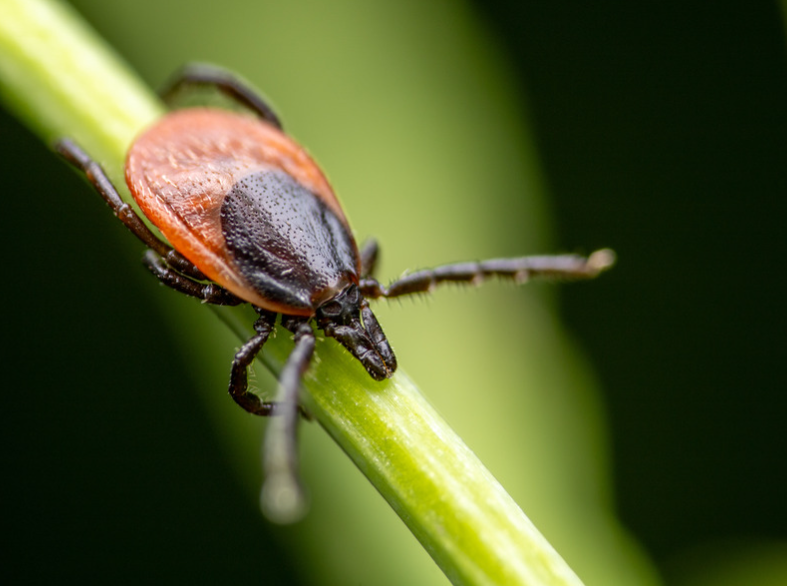
Shifts in seasons, as a result of climate change, are also shifting vector ranges. Some tick species are expanding northward and into higher altitudes as winters become milder and warm seasons lengthen, increasing the risk of Lyme disease and other tick-borne illnesses in previously unaffected areas. Additionally, some mosquito species that transmit dengue, Zika, and chikungunya viruses, are similarly moving into temperate zones that were once too cold to support their life cycles. Crucially, these changes extend the period during which humans and other hosts may be exposed to infectious bites, which increases overall disease risk.
Taken together, these climate-driven changes are reshaping the geography, seasonality, and intensity of vector-borne diseases across the United States. The traditional boundaries that once defined “tick country” or “mosquito season” are blurring, with vectors appearing earlier in the year, persisting longer into the fall, and occupying regions that were once historically too cold to support them.
The following chart shows the emerging risk of some of the more common vector-transmitted diseases seen recently in the United States. This list is not exhaustive, but the examples listed below indicate the effects of climate change on vector ecology.
Disease | Health Impacts | Vector | Potential Expansion | Climatic Drivers | Observed & Projected Trends |
Lyme disease | - Fever, fatigue, arthritis, neurological complications -Severe long-term effect management (Post-Treatment Lyme Disease Syndrome [PTLDS]) | Ticks (Deer tick; blacklegged tick) | Northeastern, Upper Midwest, New England, southern Canada | - Warmer winters increase tick survival and reproduction -Longer frost-free periods - Expanding host habitat and population (deer, rodents) due to milder winters | - Range shifted northward by 35–50 miles per decade since 1990. - Human Lyme cases more than doubled between 2000 and 2020. |
West Nile virus | - Most cases asymptomatic; severe infections cause meningitis, encephalitis, and death in <1% of cases - Long-term neurological effects in survivors
| Mosquitoes | Nationwide (western and central U.S. most critical) | - Hotter summers - Drought conditions can concentrate organic matter in breeding pools | - Annual West Nile outbreaks now occur farther north and earlier in the season - Outbreak intensity correlates with mean summer temperature anomalies |
Dengue, Chikungunya, Zika, Yellow Fever (potential) | - Febrile illness [feverishness], rash, and joint pain (dengue/chikungunya) - Severe cases include hemorrhagic dengue and Zika-associated birth defects including microcephaly
| Mosquitoes | Southern U.S. (Florida, Texas, Arizona), future encroachment into mid-Atlantic region | - Urban heat islands create localized warmth, favoring breeding - Increasing rainfall variability provides more water sources - Warmer temperatures reduce virus incubation time in mosquitoes | - Locally transmitted dengue cases reported annually in Florida and Texas - Zika transmission risk persists seasonally since introduction |
Malaria (re-emerging risk) | - Fever, anemia, renal and cerebral complications in severe cases - Risk of local outbreaks if climatic suitability persists | Mosquitoes | Historically southeastern U.S.; sporadic local cases in Florida and Texas | - Warmer night temperatures and wetter habitats increase vector capacity - Reintroduction via imported human cases from travel | - First locally acquired U.S. malaria cases in 20 years reported in 2023 - Modeling suggests southern U.S. may support seasonal transmission by 2050 |
Rocky Mountain Spotted Fever (RMSF) | - Fever, headache, and characteristic rash- Can progress rapidly to multi-organ failure if untreated- One of the most lethal tick-borne diseases in the Americas, with untreated fatality rates up to 25%
| Ticks (American dog tick, brown dog tick) | Outbreaks increasingly reported in the Southwest and Mexico border region (Arizona, Sonora) | - Warmer temperatures and extended tick activity seasons increase exposure risk | - Case numbers have increased since the early 2000s, with notable outbreaks linked to brown dog ticks in tribal communities in Arizona.- Climate projections indicate expanded tick habitat suitability northward and westward by 2050 |
Emerging Pathogens: Heartland virus, Bourbon virus, Eastern Equine Encephalitis (EEE) | - Severe febrile illness, neurological damage, or death (EEE fatality up to 30%)
| Tick and Mosquito | Central and Eastern U.S. | - Climate-related changes in vector habitats - Increased mosquito diversity following warmer, wetter summers | - Heartland virus now confirmed in 15 states since first detection in 2009 - EEE outbreaks increasing in frequency and severity in New England |
How does pollution influence vector-based diseases?
Human activities, particularly the extraction and combustion of fossil fuels, are the dominant drivers of global warming. Oil and gas development, including hydraulic fracturing or fracking, continues to contribute significantly to greenhouse gas emissions. Oil and gas pollution is responsible for releasing vast quantities of climate-warming carbon dioxide and methane into the atmosphere. Methane, the main component of natural gas, is over 80 times more potent than CO₂ on a 20-year timescale, meaning emissions from shale gas operations have outsized effects on accelerating climate change.
As temperatures rise and precipitation patterns shift, mosquitoes, ticks, and other vectors are expanding into new regions and prolonging their active seasons. These changes increase the risk of human exposure to diseases, such as Lyme disease, Rocky Mountain spotted fever, West Nile virus, dengue, and potentially Zika or Chikungunya in the United States. Even diseases historically confined to tropical regions may begin to emerge in temperate zones, thanks to environmental consequences caused by our continued dependence on fossil fuels.
Public health systems face the dual challenges of monitoring these shifts and preventing outbreaks before they occur. Some of the effects of climate change may be unavoidable at this point, and so public health systems need to consider inevitable changes to vector ecology in their future protective planning. Children, the elderly, and socially or economically disadvantaged populations are disproportionately affected by an increased disease burden, reflecting broader patterns of vulnerability seen in other climate-related health impacts. Those living near oil and gas infrastructure already face health risks from air pollution and encroaching industrial expansion, but communities near and far from that infrastructure will begin to encounter new health risks as the hazardous effects of climate change continue to alter our environment.
What do we do?
Vector-borne diseases are just one of the health crises driven by human-induced climate change, but there are steps we can take to protect ourselves from this growing risk.
First, communities should prepare for outbreaks with a disaster plan.
Plus, medical interventions will need to evolve to meet the changes in vector ecology. Local and State Departments of Health will likely have the most up-to-date information on vector-borne disease transmission updates in your area; for example, the Pennsylvania Department of Health offers a Tickborne Diseases Toolkit for Providers and the National Environmental Health Association (NEHA) offers a comprehensive Vector Control Toolkit.
Finally, we must address our continued reliance on fossil fuels and support a just transition to renewable energy. Doing so can help to slow the effects of climate change and, in turn, the spread of infectious disease across the United States.
References
Centers for Disease Control and Prevention. (2024). Vector-Borne Diseases. Climate and Health. https://www.cdc.gov/climate-health/php/effects/vectors.html
Deshpande, G., Beetch, J. E., Heller, J. G., Naqvi, O. H., Kuhn, K. G., Deshpande, G., Beetch, J. E., Heller, J. G., Naqvi, O. H., Kuhn, K. G. (2023). Assessing the Influence of Climate Change and Environmental Factors on the Top Tick-Borne Diseases in the United States: A Systematic Review. Microorganisms, 12(1). https://doi.org/10.3390/microorganisms12010050
Environmental Defense Fund. (n.d.) Methane: A crucial opportunity in the climate fight. https://www.edf.org/climate/methane-crucial-opportunity-climate-fight
Estrada-Peña, A., Ayllón, N., de la Fuente, J. (2012). Impact of climate trends on tick-borne pathogen transmission. Frontiers in Physiology, 3. https://doi.org/10.3389/fphys.2012.00064
Federal Emergency Management Agency. (2026). Planning Guides. FEMA. https://www.fema.gov/emergency-managers/national-preparedness/plan
International Energy Agency (2025). Greenhouse Gas Emissions from Energy Data Explorer. https://www.iea.org/data-and-statistics/data-tools/greenhouse-gas-emissions-from-energy-data-explorer
Kilpatrick, A. M., Randolph, S. E. (2012). Drivers, dynamics, and control of emerging vector-borne zoonotic diseases. The Lancet, 380(9857), 1946–1955. https://doi.org/10.1016/S0140-6736(12)61151-9
Masson-Delmotte, V., Zhai, P., Pirani, A., Connors, S. L., Péan, C., Berger, S., Caud, N., Chen, Y., Goldfarb, L., Gomis, M. I., Huang, M., Leitzell, K., Lonnoy, E., Matthews, J. B. R., Maycock, T. K., Waterfield, T., Yelekçi, Ö., Yu, R., & Zhou, B. (2021). Climate Change 2021: The Physical Science Basis. Cambridge University Press. https://doi.org/10.1017/9781009157896
Messina, J. P., Brady, O. J., Golding, N., Kraemer, M. U. G., Wint, G. R. W., Ray, S. E., Pigott, D. M., Shearer, F. M., Johnson, K., Earl, L., Marczak, L. B., Shirude, S., Davis Weaver, N., Gilbert, M., Velayudhan, R., Jones, P., Jaenisch, T., Scott, T. W., Reiner, R. C., Hay, S. I. (2019). The current and future global distribution and population at risk of dengue. Nature Microbiology, 4(9), 1508–1515. https://doi.org/10.1038/s41564-019-0476-8
Ogden, N. H., Lindsay, L. R., Morshed, M., Sockett, P. N., Artsob, H. (2009). The emergence of Lyme disease in Canada. Canadian Medical Association Journal, 180(12), 1221–1222. https://doi.org/10.1503/cmaj.080148
Paz, S. (2024). Climate change: A driver of increasing vector-borne disease transmission in non-endemic areas. PLOS Medicine, 21(4), e1004382. https://doi.org/10.1371/journal.pmed.1004382
Ryan, S.J., Carlson, C.J., Mordecai, E.A., Johnson, L.R. (2019). Global expansion and redistribution of Aedes-borne virus transmission risk with climate change. PLOS Neglected Tropical Diseases,13(3). https://doi.org/10.1371/journal.pntd.0007213


